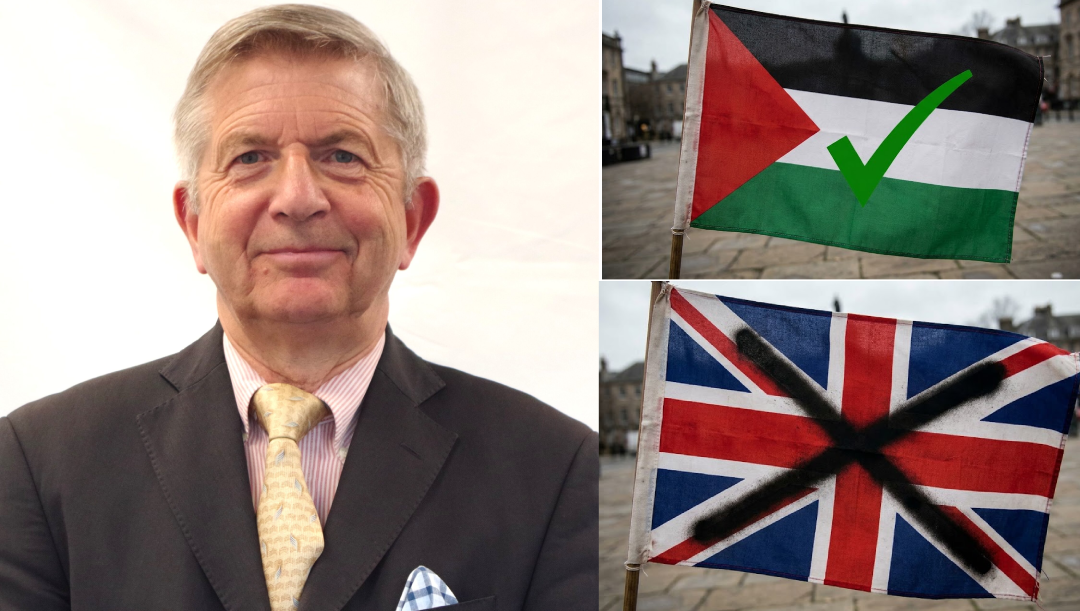
Councillors are being asked to fly the Palestinian flag on Independence Day, as public anger continues following the removal of St George’s flags and Union Jacks from around the town.
A proposal to fly the Palestinian flag outside Weymouth’s New Town Hall has reignited debate over the use of public buildings for political symbolism, following a backlash over the removal of St George’s flags and Union Jacks from around Weymouth.
The motion, submitted to Weymouth Town Council, calls for the Palestinian flag to be raised on 15 November 2026 to mark Palestine Independence Day.
Proposed by Councillor Michael Sewry and seconded by Councillor Howard Atkinson, the motion is due to be referred to the council’s Environment and Services Committee.
Under the proposed resolution, the Palestinian flag would be flown outside the New Town Hall, or other public buildings as may be decided.
The motion states that the UK Government has recently recognised the State of Palestine and argues that flying the flag would demonstrate solidarity with the Palestinian people.
However, the proposal comes amid growing public debate about which flags should be displayed on public buildings and what those decisions say about the communities they represent.
Public backlash over removal of flags
The removal of St George’s flags and Union Jacks from around Weymouth has prompted significant public backlash, with the issue becoming a source of frustration for people who believe national flags should be welcomed in their own communities.
Against that backdrop, the proposal to fly the Palestinian flag raises questions about how decisions over public flag displays are made and whether the same principles are being applied consistently.
For residents who have expressed anger over the removal of British and English flags, the prospect of another politically significant flag being raised could prove controversial.
Some may see the proposal as an expression of solidarity with Palestinians, while others may question why one flag is being proposed for display when others have recently been removed.
The debate also raises a wider question: is the council taking a consistent approach to flags, or are its decisions risking further division within the community?
There is, however, no evidence in the motion itself that councillors are seeking to provoke tensions. The proposal sets out its stated intention as showing solidarity with the Palestinian people.
Nevertheless, the timing means the issue is likely to attract scrutiny from residents on all sides of the debate.
Council officers warn of political risks
The motion's supporting documentation also contains a warning from the council's Proper Officer about the potential consequences of decisions involving flags.
The officer notes that the annual programme of flag flying is agreed by the Environment and Services Committee, but that other proposals can be raised throughout the year.
The document states that flag flying can quickly become political and carry reputational risks for the council.
It warns that, where opposing views exist, the council could be seen as taking sides and becoming involved in political matters that cause upset among sections of the community.
The paperwork also confirms that Dorset Council will not mark Palestine Independence Day by flying the flag.
The estimated financial cost of the proposal is minimal, at less than £10 per flag, according to the supporting documentation.
The legal implications are recorded as none.
Is the council risking further tensions?
The central issue is not simply whether the Palestinian flag should be flown.
It is whether local authorities are considering the wider impact of their decisions on communities that hold differing political views, national identities and personal experiences.
Supporters of the motion may argue that recognising Palestine is a legitimate expression of solidarity, particularly given the suffering of civilians during the conflict.
Others may question whether public buildings should be used to make political statements at all, particularly when decisions over national flags have already generated anger locally.
For Weymouth residents who feel their concerns about the removal of St George’s flags and Union Jacks have not been adequately addressed, the proposal could deepen perceptions of inconsistent treatment.
Is Weymouth Town Council prepared for the reaction this decision could generate, and has it properly considered the concerns of residents who feel their own flags have been unwelcome?
Those are questions the council may need to address if the motion progresses.
However, it would be premature to conclude that the proposal is intended to stir up tensions. The motion's stated purpose is to show solidarity with Palestinians, while the council officer's report explicitly warns about the potential for controversy and division.
The challenge for councillors will be to explain their reasoning transparently and demonstrate that decisions about public flag displays are being made fairly and consistently.
What happens next?
The motion is due to be referred to Weymouth Town Council's Environment and Services Committee on the 28th October 2026.
It proposes flying the Palestinian flag on 15 November 2026, but the submitted document does not record whether the proposal has been approved or rejected.
The outcome will determine whether the town marks Palestine Independence Day with an official flag display.
With the removal of St George’s flags and Union Jacks already generating public anger, the council's handling of the proposal is likely to attract further attention.
For residents, the question remains whether decisions about flags will bring communities together or risk creating further divisions.